
Poke Trivia
Studio KahTrivia
3.92.00 Reviews
- Version
- 1.0.2
- Installs
- 10.00K
- Age Rating
- Everyone
Screenshots
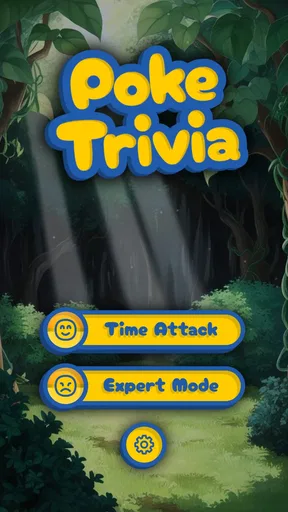
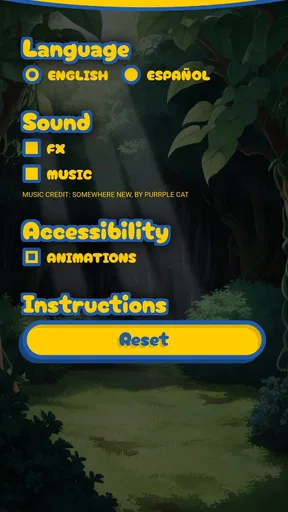
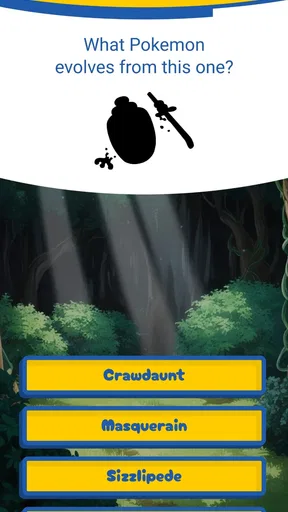
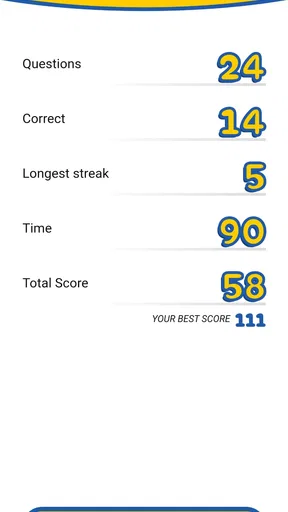
Our Review of Poke Trivia
 Analysis by Appyee
I enjoy trivia games most when they are easy to pick up but still give me a reason to think twice before answering. Poke Trivia takes that familiar format and focuses it entirely on Pokémon knowledge, making it a natural fit for players who already spend time learning creatures, moves, types, regions, or other parts of the franchise. It is a free trivia game from Studio Kah, listed for Everyone and designed for Android devices running version 7.0 or later.
My first impression is that this is a focused game rather than a large companion app. The appeal comes from testing what you already know, not from building a team, exploring a map, or managing a long-term collection. That narrow purpose is important: fans looking for a quick knowledge challenge may appreciate it, while anyone expecting a full Pokémon adventure will probably find the experience too limited.
How the quiz feels in everyday use
I find the everyday appeal of this quiz less in chasing a long session and more in having a clear, small challenge ready when a spare moment opens up. That makes it useful to think about what happens between answering and deciding whether to continue: the feedback should help me judge my knowledge, while a brief pause can keep the experience from turning into automatic tapping.
A quick starting point for spare moments
The strongest use case is a short break. I can imagine opening it while waiting for a bus, taking a few minutes away from work, or passing time before a television show starts. A trivia game benefits from this kind of low commitment because I do not need to remember a complicated objective or prepare a long session. I can simply begin answering questions and stop when I am finished.
That simplicity also affects speed expectations. A quiz built around short interactions should feel more immediate than a graphics-heavy game, and Poke Trivia is best approached with that expectation. Its value is in getting from curiosity to a challenge quickly, rather than presenting a large world to load or a detailed system to learn. On a compatible device, the basic activity should be easier to handle than a demanding action game, although the exact feel can vary with the phone and its available resources.
I would not judge it by the standards of a console-style Pokémon title. There is no reason to expect the same visual scale, depth, or sustained play. Instead, I see it as a pocket quiz for moments when I want to check whether my memory is as good as I think it is. That distinction makes the game easier to appreciate and prevents the wrong comparison from shaping expectations.
What makes the questions worthwhile
A good Pokémon quiz does more than ask for obvious names. The most enjoyable questions in this kind of game are the ones that expose a gap between casual familiarity and detailed knowledge. I may recognize a creature immediately but hesitate when the question touches on a related fact, an evolution connection, or a less frequently discussed part of the series. That tension is what turns a simple tap into a genuine test.
For new fans, the game can work as a gentle way to notice which areas deserve more attention. For experienced players, it provides a quick memory check. I would especially use it after spending time with Pokémon media or games, because the quiz format gives me a way to see whether those details stayed with me instead of disappearing as soon as I put the controller down.
There is also a social angle, even if I am playing alone. A question that catches me off guard can become a small conversation starter with friends or family members who follow Pokémon. Taking turns answering on the same device could make a short waiting period more entertaining, though the game is still primarily useful as a personal challenge rather than a full multiplayer party experience.
Handling a busy session
Heavy use here does not mean rendering a large environment or running a long online match. It means moving through many questions in one sitting, restarting after mistakes, or repeatedly returning to improve my own knowledge. That kind of use is where the game’s focused design matters most. A compact trivia experience can remain comfortable when I want several short rounds, but it can also feel repetitive if the question variety does not keep pace with my interest.
I would approach longer sessions with a simple habit: stop when I begin answering from rhythm rather than knowledge. Once I am tapping quickly without considering the question, the challenge loses some of its value. Taking a break and returning later can make the quiz feel more honest because I am testing memory instead of merely reacting to familiar screen patterns.
Another useful approach is to treat wrong answers as study prompts rather than failures. When I miss something, I can note the subject that caused trouble and use that as a guide for what to review elsewhere. This gives the game a little more lasting value without pretending that it replaces a reference guide or an organized learning tool.
Resource demands and practical comfort
Because this is a trivia game rather than a visually ambitious adventure, I would expect its everyday demands to be modest compared with larger mobile games. That makes it more suitable for older compatible phones, especially for people who do not want to reserve substantial attention for a complex title. Still, “light” should not be confused with universally effortless. A device with very little free storage, many background apps, or an aging battery can make any game less pleasant.
For the smoothest experience, I would close apps that are already consuming memory, keep the operating system reasonably maintained, and avoid judging performance while the phone is busy with downloads or updates. These are ordinary precautions, but they matter more in a quick game because even a small pause can interrupt the rhythm of answering.
Battery use is another practical consideration. Short quiz sessions should be easier on a phone than extended 3D play, yet repeated launches throughout the day still add up. If I were trying to conserve power, I would use the game in brief bursts rather than leave it open while doing other things. That is less about a special feature and more about matching the app to the way a phone handles background activity.
Stability and recovering from interruptions
Reliability matters in trivia because losing a question or breaking a run can be more frustrating than a small delay in a casual puzzle. I pay attention to what happens when a notification appears, when I switch briefly to another app, or when the phone locks. A well-behaved quiz should let me return without making the interruption feel like a major event.
I would also keep expectations realistic with an early release. This title launched on January 30, 2025, and its current version is 1.0.2, so it has a relatively compact version history compared with long-established mobile games. That does not automatically make it unstable, but it does make updates worth noticing. If a problem appears, checking that the installed version is current is a sensible first recovery step.
When a session behaves unexpectedly, my practical sequence would be straightforward: leave and reopen the game, check that the phone has enough free space, restart the device if necessary, and make sure the operating system meets the requirement. I would avoid assuming that every pause is a fault in the game itself, since network activity, system load, and device age can all affect a mobile experience. The important point is that the game’s small scope should make recovery less intimidating than recovering a large title with many connected systems.
I also prefer not to treat one interrupted session as proof that the whole game is unreliable. A single device can have its own background restrictions or memory pressure. On the other hand, repeated interruptions would change my recommendation, especially for someone who wants a dependable quiz during travel or in situations where restarting is inconvenient.
Compatibility for older phones
The minimum requirement of Android 7.0 gives the game a broad potential audience among Android users, including people who do not own a recent flagship. That is useful for a simple trivia title because the audience is not forced toward the newest hardware just to answer questions. It also makes the game a reasonable candidate for a spare phone used by a younger family member, provided the device is running the required software.
Compatibility alone does not guarantee identical performance across every phone. Older hardware may have slower storage, less available memory, or a battery that no longer holds a strong charge. I would install it on an older device with moderate expectations: the game’s category suggests a lighter workload, but the final comfort still depends on the condition of the phone.
The Everyone age rating also makes the game easier to consider for shared household use. I would still look at the device settings and the child’s broader screen-time habits, because an age label does not decide whether a particular amount of play is appropriate. For a family, the best role for this game is probably a short knowledge activity that can be discussed together, not an app left running for hours.
Where it sits among other trivia choices
Compared with broad trivia apps, Poke Trivia gains focus by refusing to divide attention among history, sport, science, entertainment, and general knowledge. If Pokémon is the subject I want, that specialization is a strength. I spend less time waiting for a relevant category and more time confronting the details that interest me.
The trade-off is obvious: the same focus can become a limitation for anyone who wants variety. A general quiz app is a better choice when I want to switch from Pokémon questions to geography or current events without changing games. A flashcard app may also be better if my main goal is systematic memorization, because flashcards usually let me control the material more deliberately. Poke Trivia is more appealing when I want a playful test rather than a structured study plan.
It also differs from a full Pokémon game in purpose. A role-playing or collection-focused title gives me progression through exploration and decisions. This game instead asks me to rely on recognition and recall. I would choose it before those larger alternatives when I have only a few minutes, but I would not use it as a substitute for the feeling of discovering a new area or developing a team.
Who will get the most from it
The best audience is someone who already enjoys Pokémon and likes being challenged on details. Casual fans can use it to see how much they remember, while dedicated fans may enjoy the satisfaction of answering questions that are not immediately obvious. It can also work for two people who want a simple turn-taking activity without setting up a larger game.
I would be more cautious recommending it to players who need constant novelty, a deep progression system, or a strong competitive structure. Trivia can be engaging, but its replay value depends heavily on how the question experience matches the player’s knowledge and tolerance for repetition. If I already know most of the material, the challenge may fade quickly; if I know very little, repeated misses may feel discouraging unless I enjoy learning through mistakes.
One practical tip is to avoid using the game as a measure of whether someone is a “real” fan. Memory is uneven. I may know obscure facts about one generation and struggle with a basic question from another. Treating the results as a map of strengths and weaknesses makes the experience more enjoyable than treating every wrong answer as a verdict.
What the early reception suggests
The game has passed ten thousand installs and holds a 3.9 average from around twenty ratings, with two written reviews shown alongside that reception. Those figures suggest that it has found an initial audience, but they are still a small base for drawing sweeping conclusions about long-term quality. I would read the rating as a useful signal of mixed-to-positive early interest rather than as a final judgment.
That context matters when deciding whether to try it. Since the price is free, the practical barrier is low, and a curious Pokémon fan can make a personal decision after a short session. I would be less concerned about committing money and more concerned about whether the question style, pacing, and variety suit my own knowledge level.
Studio Kah’s involvement gives the game a clear identity, but I would still evaluate it as an individual trivia experience rather than assuming that the developer’s name guarantees a particular level of polish. The most important test is whether it remains readable, responsive, and interesting on the device I plan to use.
My performance verdict
From a performance perspective, Poke Trivia is easiest to recommend to people who want a compact, focused game that should place fewer demands on a phone than a large action or exploration title. Its Android 7.0 requirement keeps the door open to older devices, and its trivia format suits short sessions, quick recovery, and casual shared play. I would install it with confidence on a reasonably maintained compatible phone, while remembering that old hardware and background load can still affect responsiveness.
Its main weakness is not necessarily technical. The bigger question is endurance. A specialized Pokémon quiz can be satisfying when I want exactly that subject, but it does not offer the broad range of a general trivia app or the structured learning of flashcards. Players who need a rich progression loop should look elsewhere, and fans who already know every likely question may run out of challenge sooner than they expect.
For me, the recommendation is straightforward: try it if you want a free, low-commitment way to test Pokémon knowledge, especially during short gaps in the day. Keep sessions purposeful, use missed answers as clues for further learning, and judge stability on your own phone rather than on assumptions about every device. Its best quality is its focused simplicity, and that is also the boundary of what it can offer.
With its Everyone rating, free access, and early presence on Android, Poke Trivia is a sensible pick for fans who want a quick memory challenge instead of another large game demanding constant attention. I would recommend it as a lightweight companion for Pokémon conversations and spare moments, not as a replacement for a full Pokémon adventure or a serious study tool.
Verdict
Strengths of Poke Trivia
- Quick rounds make it easy to play during short breaks.
- Covers Pokémon from multiple generations and categories.
- Simple controls are suitable for younger players.
- Helpful feedback makes wrong answers useful for learning.
- Lightweight design should run well on most modern phones.
Limitations of Poke Trivia
- Some questions may feel too easy for experienced fans.
- Limited challenge variety can reduce replay value over time.
- Progression may feel repetitive after several quiz sessions.
- Niche Pokémon knowledge is needed for the hardest questions.
- An internet connection may be required for some features.
Similar Picks in This Category
View All
Millionaire 2026 Quiz & Trivia
Quiz & Trivia Games by Submarine Apps4.5

Brain Test 2: Tricky Stories
Unico Studio4.7

Trivia Crack: Brain Quiz Games
etermax4.4

QuizzLand. Quiz & Trivia game
Quiz & Trivia Games by Mno Go Apps4.8

Brain Test: Tricky Puzzles
Unico Studio4.7

Logo Quiz
bubble quiz games4.5
Frequently Asked Questions
What is Poke Trivia?
Poke Trivia is a quiz game designed for fans of Pokémon and general trivia challenges. It tests your knowledge of characters, creatures, games, regions, abilities, and other Pokémon-related details through question-based gameplay. The experience is mainly focused on answering questions, improving your score, and seeing how well you remember information from the Pokémon universe.
How does the gameplay in Poke Trivia work?
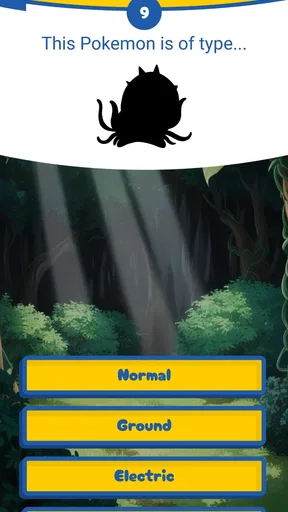
After starting a quiz, Poke Trivia presents questions with several possible answers, and you must choose the option you believe is correct. Depending on the version and available modes, the game may include different categories, difficulty levels, scoring systems, or timed challenges. Reading each question carefully is important because some answers can be very similar.
Is Poke Trivia suitable for beginners and younger players?
Poke Trivia can be suitable for beginners, casual players, and Pokémon fans who want a simple knowledge-based game. However, the difficulty may vary considerably because some questions focus on details that only experienced players are likely to remember. Younger users can enjoy the familiar theme, although parents should review the app’s advertising, privacy information, and age rating before installation.
Does Poke Trivia require an internet connection?
The internet requirements may depend on the version of Poke Trivia installed and the features being used. Basic quiz content may work offline in some releases, while advertisements, score synchronization, updates, online rankings, or additional question packs can require a connection. It is best to check the store listing and test the app before relying on it during travel.
Is Poke Trivia free to download and play?
Poke Trivia may be available as a free download, but the overall experience can include advertisements, optional purchases, or restrictions on certain content depending on the platform and release. Before downloading, review the Google Play or App Store listing for current pricing details, in-app purchase information, permissions, and the developer’s privacy policy so there are no surprises.
Play our best games!


